I Fed a Storyboard Into Seedance 2 on Magnific Spaces. Here's the 15-Second Product Ad That Came Out.

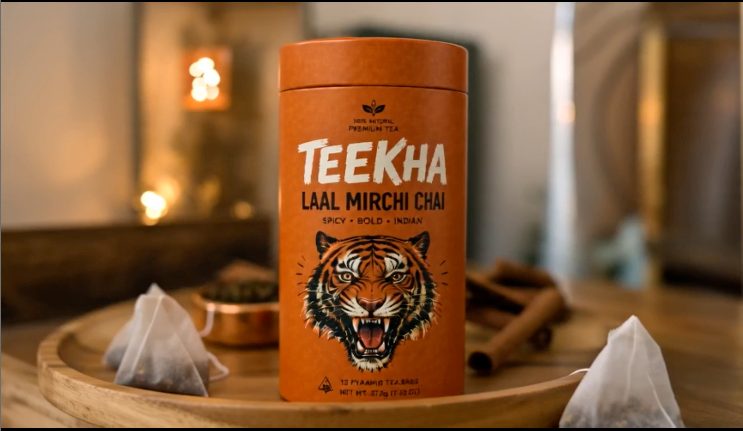
TEEKHA is a fictional Indian chai brand I built purely as a testing subject. Saffron and forest green, a roaring tiger logo, three blends, and the tagline Ek Sip. Poora Dhamaka. Last week it had brand assets. This week it has a 15-second product video ad.
The tool was Seedance 2, accessed through Magnific Spaces, formerly Freepik AI.

What Magnific Spaces Actually Is
Magnific rebranded from Freepik AI and Magnific Spaces is its canvas-style AI workspace. Think of it as a visual board where different AI nodes connect to each other: an image input, an AI assistant, a variations generator, and a video generator, all wired together in a single working environment rather than separate tools.
The workflow I used went like this: source image in, storyboard described to the AI assistant, scene breakdown generated, video output rendered. Each node feeds the next. You can see the logic of the whole thing on one screen rather than switching between tools and losing context.
It is not a complicated interface once you understand that the connections between nodes matter as much as the individual tools themselves.
The Storyboard Was the Real Work
Before touching Magnific at all, the storyboard had to be right.

The 9-panel visual grid built in the previous session using ChatGPT Images 2.0 covered the full arc: scattered red chillies and cardamom on dark green marble, a close-up of the tiger illustration on the tin, the tin standing tall, a hand lifting the lid with steam releasing, a pyramid tea bag on a spoon, chai steeping in a glass cup, steam rising with the tiger appearing above the cup, spices swirling around the words "Spicy. Bold. Indian," and finally the product with a Shop Now end card.
Each frame was composed to work as a standalone image and as part of a visual sequence. The lighting was consistent across panels. The product appeared in the same orientation across the frames where it needed to. None of this happened automatically. It required deliberate thinking about how one frame would transition into the next before any video generation began.
This is the part most write-ups about AI video tools skip over. Seedance did not make creative decisions. It animated what was already logically prepared.
The Magnific Spaces Process
The source image, the TEEKHA Laal Mirchi Chai product shot from last week's ChatGPT session, went in as the starting reference. The AI assistant node inside Spaces read the storyboard and broke it into a timestamped scene-by-scene brief:
00:00 to 00:02: chillies and cardamom scattering on dark green marble with a fast-paced tabla beat. 00:02 to 00:04: rapid zoom into the tiger's eyes on the tin, synchronized with a bass swell. 00:04 to 00:06: a hand pops the lid, releasing a plume of spicy orange-tinted steam transitioning into a macro shot of a pyramid tea bag. 00:06 to 00:09: high-speed footage of the tea bag steeping.

The assistant generated this breakdown from the storyboard input. I did not write the timestamps manually. That scaffolding then fed directly into the Video Generator node, which used it as the motion brief for Seedance 2.
The generation itself was smooth. Seedance followed the visual logic that had already been established across the storyboard panels. It did not need significant re-prompting. The output moved through the scenes with the pacing and cinematic quality the storyboard had implied.
The Output
The video is 15 seconds. It opens on the spices, moves through the tiger close-up, the lid lift, the tea bag, the steeping chai, the tiger appearing in the steam above the cup, the spice swirl with "Spicy. Bold. Indian." landing on screen, and closes on the product with the Shop Now card.
It looks like a real product ad. Not a rough draft, not a proof of concept sketch. Something a D2C brand would actually publish.
Honest Assessment
The video is not perfect. There are moments where the motion between some frames feels slightly mechanical rather than cinematic. A professional motion designer with the same footage would produce a tighter cut. The transitions that worked best were the ones where the storyboard frames had the clearest visual continuity. Where the frames were slightly ambiguous in their composition, the animation showed it.
The AI assistant's scene breakdown was useful as a starting structure but it was not the creative direction. It described what was already in the storyboard, it did not generate new ideas. The value was in converting a visual brief into a timestamped motion brief quickly, which saved time and kept the logic consistent going into the Video Generator.
Seedance 2 rewarded prepared inputs. It did not compensate for unclear ones.
What This Changes
A product video ad used to require a production budget, a studio, a videographer, a motion designer, and several rounds of client revision. What this experiment demonstrates is that for early-stage validation, for founders testing whether an idea looks real before investing in making it real, the barrier has dropped significantly.
The creative thinking still has to happen first and it has to happen well. The storyboard is now the product. Everything downstream of a well-constructed storyboard can be handled by tools like Seedance inside Magnific Spaces. That upstream thinking has not been automated and does not look like it will be anytime soon.
TEEKHA started as a name and a color palette six days ago. It now has product photography, a bilingual advertising poster, a mobile app UI, an investor pitch deck, and a 15-second video ad. Every asset was AI-generated. The brand is still entirely fictional. The outputs are not.


Comments